
Discovering Tong
Previous Previous  Index  Next Next  

Tong Church - Chapter 7

The history of an English village is often brought to life by studying the church.

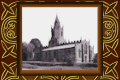
The present Tong Church and College were founded by Dame Isabel Pembrugge with the previous church and college at Shottesbrooke Berkshire in mind. Although there is evidence of an earlier Norman stone church (including a fragment of a tomb). The current Church building of 1406 has only been substantial amended for the housing of the Great Bell and the addition of the Vernon Chantry in 1510. The Victorian restoration of 1892 was carried out sensitively, restoring rather than rebuilding.

“There are many descriptions of Tong Church. The earlier ones help us to see what happened at the Victorian restoration. Archdeacon Cranage wrote his description, just after its restoration. He describes it as 'a most interesting building' of 'perpendicular character', and admires the restoration work. There is an octagonal central Tower, and within it rises the central spire altered by Sir Henry Vernon, so that it could contain the Great Bell of Tong. Above it, are six bells, and a Sanctus Bell. The bells are rung from the middle of the church. Ringing is not easy, because the floor slopes from the east to the west end. The slope may be due to the bedrock, but some have thought it was constructed to enable the Church to be cleaned easily. Water poured out at the East end would automatically run to the West.”

Chapter 7 takes us on a tour of the church taking in some of its unique features. For example concerning the fine, original carved stalls in the chancel :

“The return stall seat, for the College Warden, has an Annunciation scene with a lily in the centre with a crucifix emerging from it. This design reflects a long tradition that Jesus' crucifixion took place on the anniversary of the Annunciation. This demonstrates that Mary and Jesus share a common suffering. There are very few depictions left since the Reformation and Tong is unique in being on a misericord.

The fifth stall on the south side is of special interest. This is the only stall, with carving rather than decoration, at the top. On the right hand side is an angel, holding a shield on which are signs of the passion. This represents a typical form of devotion of the time. On the left is a face, (possibly a 'Veronica') which is very like the one on the Turin Shroud. Beneath both is an heraldic bird. The bird is that of the de Weston crest, which can be seen in the neighbouring Church at Weston-under-Lizard. In that Church are two tombs of de Westons. They were crusaders, and members of the Knights Templar. At one time, the Knights Templar claimed to posses the Turin Shroud, and they had a devotion to the face of Christ. On the seat below is the carving of a Green Man. So the whole stall becomes a meditation on faces.”

The tomb of the foundress Isabel Pembrugge is associated with a local custom. On Midsummer's Day roses are placed on her tomb. The custom dates as far back as 1200 when the flowers were placed by an image of the Blessed Virgin Mary.

“So a custom over 200 years old, continued into the new church. But at the Reformation, the statue of Our Lady would have been removed, and so the roses came to the other lady, who was lying near the Lady Chapel. The custom still continues today. Such customs were common practice. In 1316, John de Tong was granted land by Robert de Prees; the rent was a rose on Midsummer's Day. In 1353 there was a grant by John Byschop of 3 pieces of land at Tong Norton, with a similar arrangement. Another grant was conditional on the exchange of three arrows with goose feathers.”

Tong Church has spendid monuments to six generations of the Vernon family, including the remarkable Chantry (or 'Golden') Chapel.

“The whole Chantry is remarkable with its fan vaulting ceiling, which was originally painted in green, red and gold. The vaulting is very like that in the Henry VII Chapel in Westminster Abbey. The size of the Tong Chapel is much smaller, what could be achieved is restricted. It is the only surviving piece of medieval fan vaulting in Shropshire. On the east wall are the remains of a rood painting. Some of the colour is still quite bright. Underneath is an inscription requesting prayers for Henry Vernon and his family. On the west wall, there is a hollow bust of Arthur Vernon, depicted in a pulpit, preaching. On the floor is a fine brass of Arthur Vernon dressed as an Oxford M.A. Arthur was Henry's third son, tutor to Prince Arthur and subsequently Rector of Whitchurch.”

There are also memorials to the Stanleys, Anne Wydle, Henry Willoughby, William Skeffington, Elizabeth Pierrepoint, Charles Buckeridge, Daniel Higgs and the Durants. All these are described in the book.

In the churchyard there are notable memorials to the Reid Walkers, the Hartleys, the Chrysom's churchyard and more of the Durants.

Details of the Victorian restoration describes some worrying actions which would now be considered tantamount to vandalism:

“The Victorians thought that mediaeval churches were meant to have stone walls. They were not. The mention of colour on the wall is disturbing, and it hints that there may have been murals of some sort. Griffiths says that there was a small patch of an ancient mural.”

Tong Church
St. Mary and St. Bartholomew's Church, Tong

Lily Crucifix Seat
One of the very few depictions that remain, since the Reformation, of the Crucifix set in a Lily, Tong is unique in having a depiction on a misericord.

Anne Wylde
The monument to Anne Wylde in the Chancel.


For more about Tong please buy the book. The profits from the sale of the book will go towards maintaining Tong Church.

Copyright © 2007, 2008 Discovering Tong